
Google Business Profile (GBP) optimisation can help your construction company dominate local search results. This free tool, formerly known as Google My Business, allows builders, contractors, and other construction professionals to manage their online presence across Google Search and Maps. Having one is great, but optimising it can significantly boost your visibility and lead generation.
Why does your construction business need a Google Business Profile at all? Simply put, it's often the first point of contact between you and potential clients. When someone searches for construction services in your area, your GBP can appear prominently in search results, providing crucial information about your business before they even reach your website. This increased visibility can lead to more website traffic, phone calls, and ultimately more projects for your company.
In this guide, we'll explore how to leverage your GBP to its full potential, helping your construction business stand out in a competitive market and attract more local customers. From setting up your profile to advanced optimisation techniques, we'll cover everything you need to know to make GBP work for your construction business.
1. Claiming and verifying your Google Business Profile
The first crucial step in optimising your GBP is claiming and verifying ownership of your listing. This process is fundamental to establishing your construction company's online presence and ensuring you have full control over the information displayed to potential clients.
Claiming ownership of your GBP is essential because it gives you the authority to manage and update your business information, respond to reviews, and utilise all the features Google offers. Without claiming your profile, you risk having inaccurate or outdated information displayed, which could potentially drive customers away or lead to confusion about your services.
The process of claiming your profile is straightforward. Start by visiting the Google Business Profile website and searching for your construction company. If your business appears, click on it and follow the prompts to claim ownership. If your business doesn't show up, you'll need to add it by providing basic information such as your company name, address, and contact details.
Once you've initiated the claiming process, Google will need to verify that you are the rightful owner or representative of the business. Verification is a critical step that adds legitimacy to your profile and unlocks all management features. Google offers several verification methods, including postcard verification (where a code is mailed to your business address), phone verification, or email verification for some businesses.
To ensure a smooth verification process, follow these best practices:
- Use a business email address associated with your company's domain rather than a personal email.
- Ensure your business address is accurate and up-to-date.
- If opting for postcard verification, be patient and check your mail regularly for the verification code. I can’t stress this one enough. When I claimed mine years ago, I was impatient and restarted the process only to receive the original postcard a few days later, which was then invalid, forcing me to wait longer for a second one.
- Keep your contact information consistent across all online platforms to avoid any discrepancies that might delay verification.
2. Optimising your construction Google Business Profile information
Getting the basics right is important. Your details, business description, and service area signal to Google who you are, what you do, and where you do it. It’s much easier to verify you if these details are consistent and accurate.
NAP (Name, Address, Phone) consistency
NAP consistency is crucial for your construction company's online presence. Ensure your business name, address, and phone number are identical across all online platforms, including your website, GBP, and other directories. For example, if your company is "Advanced Commercial Construction”, use this exact name everywhere, not variations like "Advanced Commercial” or "AC Construction."
Consistency helps search engines verify your business information, leading to higher rankings in local search results. I would also include email in this list. Often when businesses start, they have one email address and then change to a formal one when they have a website.
Choosing the right business categories
Selecting appropriate categories for your GBP is vital for improving visibility in local searches. Google offers thousands of categories. For a construction company, you might choose "construction company" as your primary category, with secondary categories like "custom home builder" or "commercial construction company" depending on your specialties.
While Google offers a wide range of categories, you might occasionally find that your specific niche isn’t represented. In such cases, my advice is to choose the closest matching category. For instance, there’s no “copywriter” category, so I might choose “marketing consultant” or “business-to-business service.” Remember, you can always supplement your category choices with detailed descriptions and service listings to further clarify your offerings.
Crafting a compelling business description
Your GBP description is a 750-character opportunity to showcase your construction expertise and unique selling points. Focus on highlighting your key services, experience, and what sets you apart from competitors. Remember, only the first 250 characters are displayed without clicking "See more," so front-load your most important information.
Setting accurate service areas
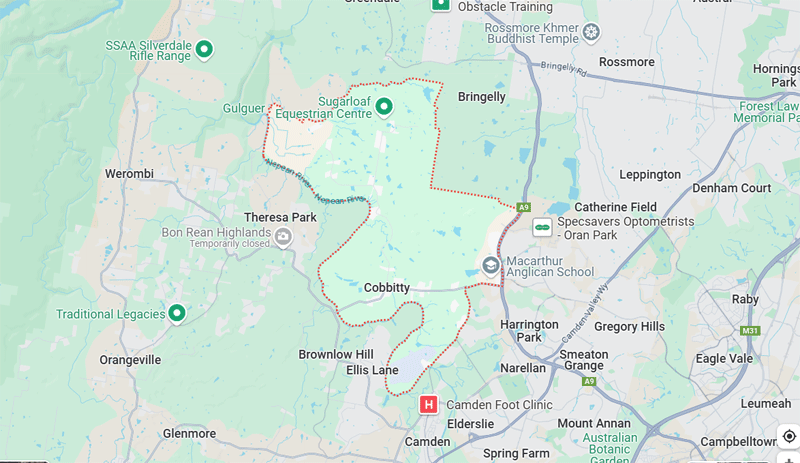
For construction companies that often work at client locations, defining your service area is crucial. You can set your service area based on cities, postcodes, or other areas you serve. This helps potential customers understand where you operate and improves your visibility in local searches.
However, when setting your service area, you need to be accurate and realistic. Google has sophisticated algorithms to detect your business’ actual location, so attempting to mislead by setting an overly broad service area won’t be effective. Instead, focus on areas where you genuinely operate and can provide services efficiently.
You can add up to 20 service areas by city, postcode or region. Google’s guideline is that the overall area shouldn’t extend beyond about two hours’ drive from your base. The exact range can vary depending on your industry and local competition. Prioritise locations where you frequently serve customers and have a strong presence. Remember, you want to attract clients within your actual operating range.
3. Visual content on your Google Business Profile
Visual content is a powerful tool that you can use to demonstrate your construction expertise and to showcase your projects. By effectively using images and videos in your GBP, you can create a compelling visual story that attracts potential clients and sets you apart from competitors.
Types of images to include
When selecting images for your GBP, focus on showcasing your best work and the range of services you offer. Include high-quality photos of completed projects, highlighting both exterior and interior transformations. These images should demonstrate the quality of your craftsmanship and the scope of your capabilities. You can also include photos of your team at work, which can help humanise your brand and give potential clients a glimpse into your company culture.
For construction companies, it's particularly effective to showcase before and after photos of your projects. These images provide a clear visual representation of the transformation you've achieved, helping potential clients envision the possibilities for their own projects.
Best practices for image quality and relevancy
To make the best impression on potential clients, ensure that all images uploaded to your GBP are high-quality and relevant to your construction business. Use well-lit, clear photos that accurately represent your work. Avoid using stock photos, as these can come across as inauthentic and may not accurately represent your specific services.
If you can hire a professional photographer to take photos of your best projects, this is a good investment because the photos can be used not only for your GBP but also for social media, case studies, and capability statements. However, if a professional photographer doesn’t fit into your budget at the moment, most phones can take good quality pictures — you simply need to pay attention to lighting and composition. Ensure your images meet Google's guidelines for size and format: JPG or PNG files between 10 KB and 5 MB, with a recommended resolution of 720 px by 720 px. The minimum is 250 px tall by 250 px wide. Visit Google's photo help page for more info.
Including videos to stand out
To truly make your GBP stand out, consider incorporating videos into your profile. Videos can provide a more immersive look at your projects and services, helping potential clients better understand your capabilities. Google allows videos up to 30 seconds long on GBP, which is ample time to showcase a project transformation or give a quick tour of a completed build. Note: file size up to 75MB and resolution of 720p or higher accepted.
When creating videos for your GBP, focus on quality and relevance. Use stable shots, clear audio (if applicable), and ensure the content is directly related to your construction services. Time-lapse videos of project progress can be particularly effective, as they condense long-term projects into easily digestible content that demonstrates your efficiency and expertise.
4. Managing and leveraging client reviews in your Google Business Profile
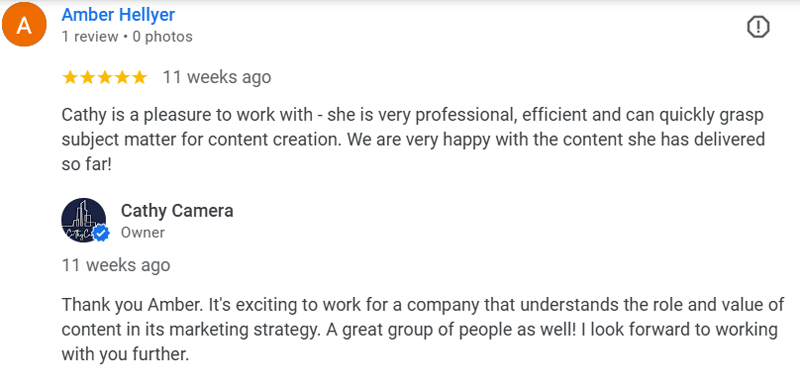
In the construction industry, customer reviews can make or break your business. They're powerful tools that can significantly influence potential clients' decisions and shape your company's reputation. Having testimonials on your GBP signals to Google that you are who you say you are and can back up your service and expertise claims with social proof.
Importance of reviews for construction businesses
For construction companies, reviews are particularly crucial. They provide social proof of your workmanship, reliability, and professionalism. Positive testimonials can be the deciding factor for potential clients who are comparing multiple contractors. For high-value, long-term projects like construction, this impact is even more pronounced.
Strategies for encouraging client reviews
Having worked with many construction companies, it’s clear that gathering testimonials is something often forgotten about. But I believe that actively seeking reviews should be a part of your project completion process. Never offer discounts or gifts in exchange for reviews though as this breaks Google's rules an dcan get reviews removed.
Here are some effective strategies to help you obtain reviews the right way:
1. Timing is key: Ask for reviews when client satisfaction is at its peak, typically right after project completion.
2. Make it easy: Provide direct links to your Google Business Profile or other review platforms.
3. Follow up: Send a friendly reminder email a week after project completion if the client hasn't left a review.
Responding to feedback professionally
Whether positive or negative, every review deserves a response. This shows that you value customer feedback and are actively engaged with your clients.
For positive reviews:
• Thank the client sincerely
• Mention specific details about their project to personalise your response
• Express your appreciation for their business
For negative reviews:
• Respond promptly and calmly
• Acknowledge the client's concerns
• Offer to discuss the issue offline to find a resolution
• If appropriate, explain steps you're taking to address the problem
Remember, your responses are public and potential clients will read them. They're an opportunity to showcase your professionalism and commitment to customer satisfaction.
Using reviews to improve your services
Reviews are not just for potential clients. They're also valuable feedback for your business. Regularly analyse your reviews to identify:
• Common positive points: These are your strengths. Emphasise them in your marketing.
• Recurring issues: Address these to improve your services.
• New ideas: Clients might suggest services or improvements you haven't considered.
5. Answering client questions on your Google Business Profile
Google used to have a Q&A section where you could post and answer common questions, but they've now removed it. Google has replaced it with “Ask Maps”, an AI feature that answers people’s questions about your business using information it finds across your profile and website.
That means the information you give Google matters more than ever. To make sure its AI gives accurate answers about your construction business:
- Fill in every section of your profile, including services, service areas and hours.
- Answer common questions in your business description and your posts.
- Add an FAQ page to your website with clear answers about the work you do, the areas you cover and how your process works.
- Encourage detailed reviews that mention the type of project you completed.
Every so often, search for your business in Google Maps and try asking a question. If the answer is wrong, update your profile or website, not the AI.
6. Regular posting and updates on your Google Business Profile
Maintaining an active Google Business Profile through regular posts and updates is crucial for construction companies to engage potential clients and maintain visibility in local search results. For instance, if you introduce a new service, ensure you add it to the services section of your GBP.
Types of posts that engage potential clients
Construction companies can also leverage the posts section to attract and engage potential clients. Select Add update/Add a post section to add any type of news. Posts are displayed in reverse chronological order, with the most recent posts appearing first. Older posts get less visible, so make sure you post regularly. Here are some post ideas (which can also be used on other social media platforms):
1. Project updates: Share progress on ongoing projects, highlighting key milestones and showcasing your expertise.
2. Before and after photos: Visual representations of your work can be powerful in demonstrating your capabilities.
3. Client success stories: Share case studies or testimonials from satisfied customers. Sometimes testimonials are given offline so you can add them via this section.
4. Industry insights: Publish information about new regulations or trends in the construction industry.
5. Team spotlights: Introduce your employees, showcasing the human side of your business.
6. Special offers or promotions: Highlight limited-time deals or seasonal discounts. Remember to delete these when they no longer apply.
Frequency of posting for optimal visibility
To maximise visibility and engagement on your Google Business Profile some experts suggest posting once every two to three days, but I understand this can be overwhelming. Like I tell my clients about other social media platforms, start with what is possible, even if it’s posting once a month or once a week. You can schedule GBP posts from third party tools so it can slot in with your other overall social media strategy.
7. Strategic keyword usage for your Google Business Profile
Using local and industry-specific keywords
When optimising your Google Business Profile, focus on a mix of local and industry-specific keywords. For construction companies, this might include terms like "residential construction [city name]" or "commercial building contractor [location]". Use these keywords strategically in your business description, posts, and service listings to improve your visibility in local search results.
Optimising your business description for search
Your business description is a prime location for keyword integration. Craft a compelling narrative that naturally incorporates your target keywords.
1. Highlight your unique selling proposition (USP): What makes your construction company different? Maybe you specialise in eco-friendly builds, have a unique project management approach, or offer innovative design solutions.
2. Tell your story: Share a brief anecdote about why you started the company or a significant project that defines your approach.
3. Use vivid language: Instead of generic terms, use descriptive words that paint a picture of your work.
4. Showcase your personality: Let your company's culture and values shine through in your writing style.
5. Focus on benefits, not just services: Explain how your work improves clients' lives or businesses.
Remember to place important keywords near the beginning of your description, as this can have a greater impact on search visibility.
Google Business Profile optimisation could give your construction business the edge against competitors
While many construction companies already have a Google Business Profile, many are not leveraging it to its full SEO potential. This is a significant missed opportunity. A well-optimised Google Business Profile is an essential tool for construction companies looking to stand out in a competitive market. By implementing these strategies, you'll enhance your visibility in local search results, effectively showcase your expertise, and build credibility with potential clients.
Remember, consistency is key. Regular updates and attention to detail in your profile will help maintain a strong online presence. Take the time to optimise your Google Business Profile today, and you should see a positive impact on your construction business's growth and client acquisition. SEO is multi-faceted, and optimising your GBP is an important part of the puzzle.
Need further help with Google Business Profile optimisation? Get in touch.